
Import guides
Chile Customs: how an import from China is cleared
Chile Customs step by step: import declaration, customs broker, selectivity channels and the real container release times.
720 searches/month in Chile
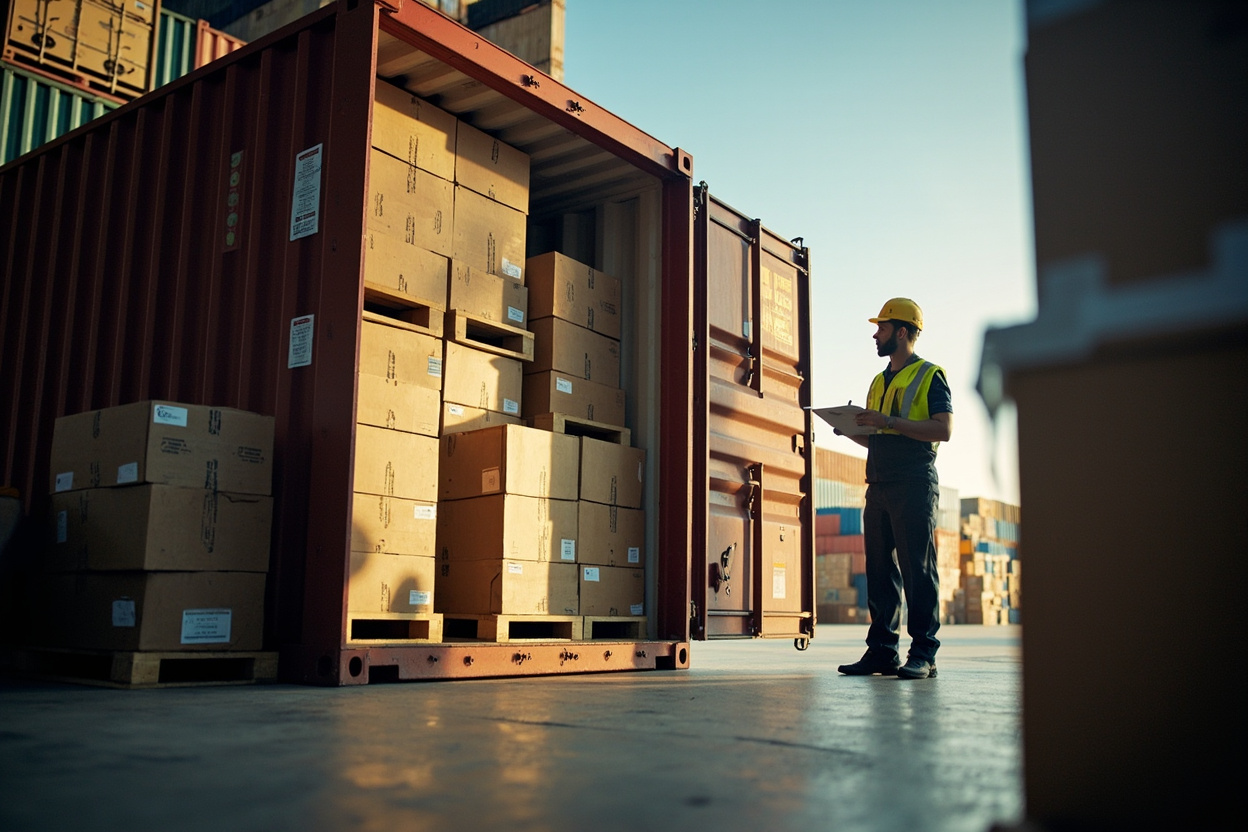
What Chile Customs is and what it does with your cargo
Chile Customs is the National Customs Service (Servicio Nacional de Aduanas, SNA), a dependency of the Ministry of Finance that operates throughout the country. It concentrates three functions: collecting the duties that burden the entry of goods, verifying that the authorised cargo is actually there, and producing foreign trade statistics.
For the importer, Customs appears at a single moment, the release, but what happens before and after determines whether the container comes out in one day or in two weeks. The carrier transmits the manifest and Customs opens the case file; the broker files the import declaration (D.I.) electronically; the system assigns a selectivity channel that decides whether automatic validation is enough or whether an inspector is reviewing everything.
It is worth separating Customs from the other institutions: the sanitary permit is issued by SAG, health products are authorised by ISP and fuels are reviewed by SEC. If one of them is missing, the container does not move even if the D.I. is flawless. And there is one factor that almost nobody takes into account: China supplies about 28.5% of Chile’s imports, so Chinese containers are among the most closely scrutinised.
Customs clearance of an import from China, step by step
| Stage | What happens | Responsible party | Reference timeframe |
|---|---|---|---|
| Manifest | The carrier transmits it, Customs opens the case file | Carrier | 24–48 h |
| Receipt of documents | Invoice, packing list and shipment | Broker | 24–72 h |
| Filing of the D.I. | It is submitted online and the DIN number is assigned | Broker | 1–2 business days |
| Validation | The system cross-checks the data and assigns the channel | SNA system | Immediate |
| Payment of duties | Duty, VAT and charges online or under guarantee | Broker | 24–48 h |
| Inspection | Documentary or physical verification | Inspector | 1–10 business days |
| Release | Favourable resolution and removal of the container | Customs and terminal | 24–48 h |
| Exit from the port premises | Storage, manoeuvring and transport | Terminal | 24–72 h |
These timeframes are operating ranges, not commitments by the Service: a clean case file in the green channel can be resolved in 24 hours, and one under physical review in one or two weeks.
Customs broker or declarant: who can clear an import
The rule is set by the National Customs Service: above US$1,000 FOB, a commercial import must be entrusted to a customs broker. Below that amount there is a simplified route, the import declaration and simultaneous payment, which the importer can process personally.
The customs broker is a natural or legal person authorised by Customs, with a public registration. It has the standing of a minister of faith: what it declares is taken as true by Customs and, for that reason, it answers for errors. If the tariff classification is wrong, if the declared value does not match the invoice or if the origin is not properly evidenced, the consequences fall back on the importer. The customs declarant is an assistant who processes under the umbrella of a broker.
Fees are set per clearance and have no single tariff. For a full container the usual market range in Chile is between CLP 300,000 and CLP 700,000 per D.I., plus port and storage costs, which are billed separately.
What the import declaration (D.I.) is
The D.I. is the document with which the importer asks Customs to authorise the entry of the goods. It is not an administrative formality: it is the act that turns the cargo into nationalised merchandise and the legal support for what was paid. Each line item needs a complete set of data: tariff line, technical description, country of origin, quantity, unit value and total, and the duty applied, general or preferential under the Chile–China Free Trade Agreement (TLC).
For every import of a commercial nature, the original bill of lading, the waybill or air waybill, the original commercial invoice, the importer’s sworn declaration of value and the mandate constituted by the bill of lading endorsement are mandatory. If the transaction value reaches or exceeds US$50,000 CIF, the sworn declaration of value is required at the subsequent examination.
Container release times and why the container does not come out
After the D.I. is accepted, the system assigns a channel according to the risk profile of the operation:
| Channel | What it reviews | Usual timeframe |
|---|---|---|
| Green | Nothing physical; automatic validation | 24–72 business hours |
| Yellow or orange | In-depth documentary review, with the originals on the table | 3–5 business days |
| Red | Physical examination and comparison against the case file | 7–15 business days |
A red channel stretches much further if the goods require opening, sampling, laboratory analysis or phytosanitary review. At that point the problem is no longer Customs: it is how many days the container stays stored in the yard. On release, the wait at the terminal is added, with the free storage days set by the contract with the carrier.
The six most common reasons a container is held
- Description that does not match. The invoice says “textile”, the packing list says “garments” and the shipment says “cotton garments”: the inspector cannot determine the duty.
- Certificate of origin that does not accompany it. Without a C.O., or with one that describes something else, the cargo enters paying the general duty instead of 0%.
- Weight and package counts that do not add up. The list declares 18 packages and 21,000 kg; the count shows 20.
- Missing sectoral permit. SAG, ISP or SEC without a current authorisation: the blockage is total.
- Container without a fumigation certificate. Where required under the international convention on transit cargo, the line does not release the box without that document.
- Declared value that does not withstand the comparison. Invoice, payment and bill of lading with different figures, without backing.
Frequently Asked Questions
- How much does a customs broker in Chile charge for a container?: Between CLP 300,000 and CLP 700,000 per D.I., plus port and storage costs, which are billed separately.
- Can I clear an import without a customs broker?: Only up to US$1,000 FOB through the simplified route; above that amount a broker is mandatory.
- How long does the release of a container coming from China take?: Between 24 and 72 business hours in the green channel and between 7 and 15 business days in the red channel.
- What happens if the invoice does not match the packing list?: The D.I. is rejected or kept with observations: it has to be corrected and filed again before the container comes out.
- Can I be fined for an error in the D.I.?: Yes. The broker answers as minister of faith and the tax authority can determine differences in duties and interest.
Want us to review it for you?
Send us your commercial invoice and the certificate of origin. We tell you whether the HS code qualifies for 0% duty and which documents are missing before you ship.