
China–Chile import high season: how transit times move from November to March
Between November and March, freight rates rise, discharge at the Chilean port takes longer and space closes earlier. How to anticipate it and how much margin to leave in your replenishment plan.
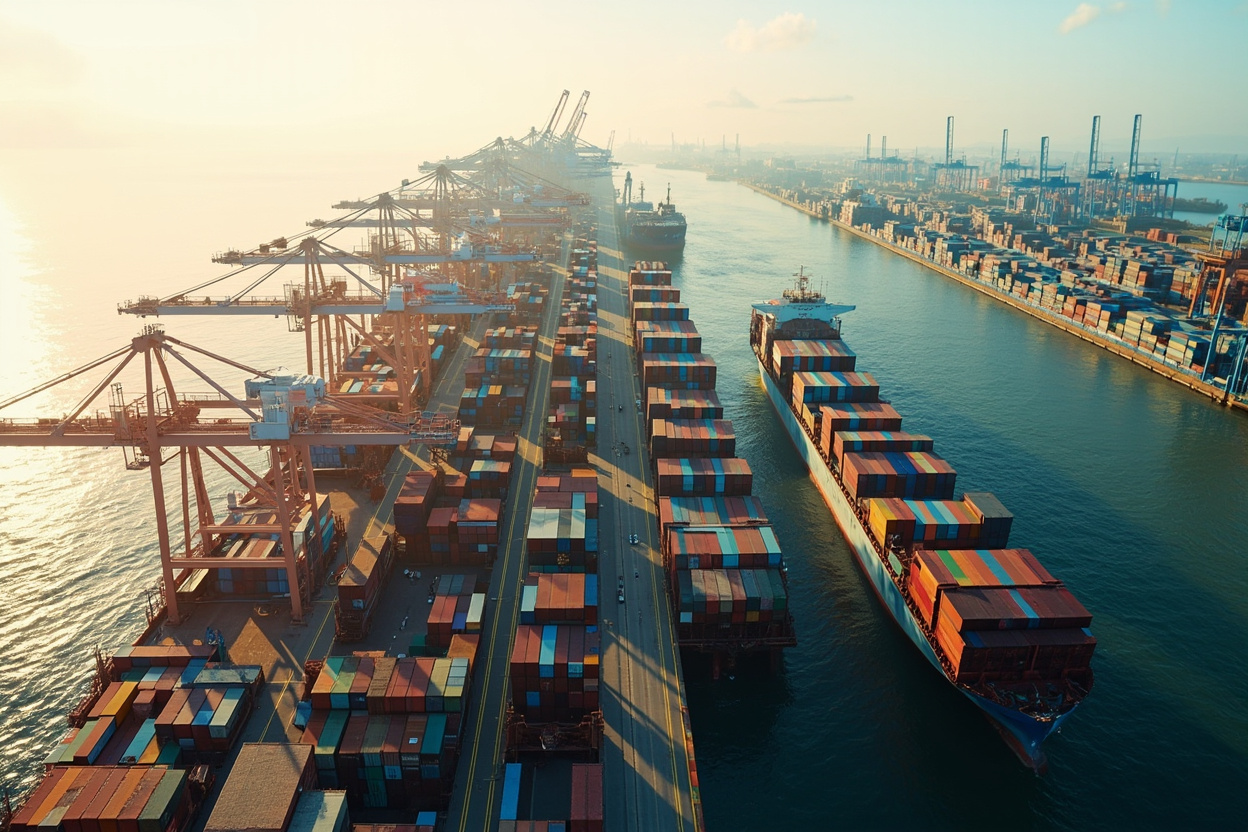
High season is not a date that starts on November 1; it is a curve that starts dragging in from the second half of October and ends in March. For a Chilean importer bringing in cargo from China, that curve touches three things at once: the freight rate, the available space and the speed of discharge at the Chilean port.
This article does not predict how much your freight rate will go up. It explains what moves, in what order, and how much margin is worth leaving in your plan.
The three effects, and why they matter in a different order
1. The rate rises first, and that is what hurts most
The season surcharge — called BAF by the shipping line and congestion by the terminal — is applied on top of the base rate. On China–Chile routes, the typical movement of a 20GP is USD 1,450 to USD 2,400 outside high season; with the season surcharge, that range shifts up to USD 1,600 to USD 3,000.
BAF is the least disputable part: it is calculated on fuel and moves with the oil price, not with demand. Congestion is the determining factor: it rises when the terminal cannot discharge as fast as cargo comes in.
| Period | Freight 20GP (reference) | Space | Delivery in Chile |
|---|---|---|---|
| August – October | USD 1,450 – 2,400 | Ample | 28 – 36 days |
| November – December | USD 1,600 – 3,000 | Closes earlier | 32 – 42 days |
| January – March | USD 1,700 – 3,000 | Tight | 30 – 40 days |
| April – July | USD 1,450 – 2,500 | Ample | 28 – 36 days |
Note: These ranges are reference values, not quoted rates. The rate your shipping line charges depends on the route, the space available at departure and the type of cargo. The formal quote is issued in writing with the detail.
2. Space closes before rates go up
This is the point that surprises new importers. In high season, the shipping line does not raise the rate immediately: it first stops accepting cargo for a specific departure, and when it accepts again, the price has already risen. If your plan depended on “shipping when the price suits me”, by November that moment has already passed.
The practical consequence: space booking is decided weeks in advance, not days. For a departure from Shanghai to Valparaíso in the first half of December, the booking decision should be made no later than the second half of October.
3. Discharge in Chile takes longer
Between 3 and 7 days is the normal customs clearance time at a Chilean port with complete documents and no physical examination. In high season, berth congestion adds between 2 and 4 days.
There is a real difference between ports here:
- Valparaíso — larger accumulated volume and the reference point for most routes. It is the first to saturate.
- San Antonio — more container and operating berth capacity. For high-volume cargo or project cargo, discharge is usually faster.
- Iquique — when the cargo is for northern Chile or for Bolivia by road, the profile is different: less concentration and a ground corridor that has its own bottleneck (the Chungará border crossing).
What to do in practice
If your replenishment is monthly and dates matter: leave China in the second half of October or the first half of November. Storage cost at destination is preferable to a 20% more expensive freight rate and four days of delay.
If your cargo is continuous replenishment: you do not need to hurry, but you do need to decide the discharge port before you ship. San Antonio for high volume, Valparaíso for groupage cargo and direct delivery to the Metropolitan Region, Iquique if the final destination is the north or Bolivia.
If your cargo is urgent: air freight does not escape high season to the same extent, because its capacity is less strained by demand. It remains the alternative when the cost of the delay exceeds the freight difference.
What does not change
The 0% duty under the Chile–China Free Trade Agreement (TLC) depends on the HS code on your invoice and on the certificate of origin that accompanies it. None of that is affected by the season. 97.2% of the tariff lines covered by the TLC stay at 0%, and the remaining 2% is on the Exclusion List.
Where the season is paid for is in the port items and in time: the terminal handling charge (THC) and handling, storage and customs clearance. That is why the cost breakdown matters more in December than in June. If you only compare freight rates, you are comparing the part that moves the least.

Frequently Asked Questions
When does high season start on China–Chile routes?
Between weeks 45 and 52 of the year, that is, from mid-November to the end of December, and it runs until March. The peak of port congestion in Chile coincides with the close of the production season in China and with retail inventory repositioning before Christmas.
How much does the freight rate rise in high season?
As a reference, the season surcharge (BAF and congestion) can move the rate of a 20GP by between 10% and 25% over the reference value, and the 40HQ by between 15% and 30%. It is not a rate promise: the exact value is confirmed in writing on every quote.
How much longer does customs clearance take at the discharge port?
Between 2 and 4 business days from congestion on discharge, on top of the normal 3 to 7 days for customs clearance. In Valparaíso, berth capacity saturates first; San Antonio has more operating capacity and usually moves high-volume cargo with less waiting.
Is it worth shipping earlier to avoid high season?
If your replenishment depends on fixed sales dates, yes. Leaving China in the second half of October or the first half of November avoids the peak in rates and congestion. The trade-off is storage cost at destination if the goods arrive before you need them.
Does the 0% TLC duty change in high season?
No. The preferential duty of the TLC depends on the HS code and the certificate of origin, not on the season. What does change is the clearance time and the cost of port items, which is where congestion gets paid for.
Next step