
Destination port · Valparaíso Region
Valparaíso
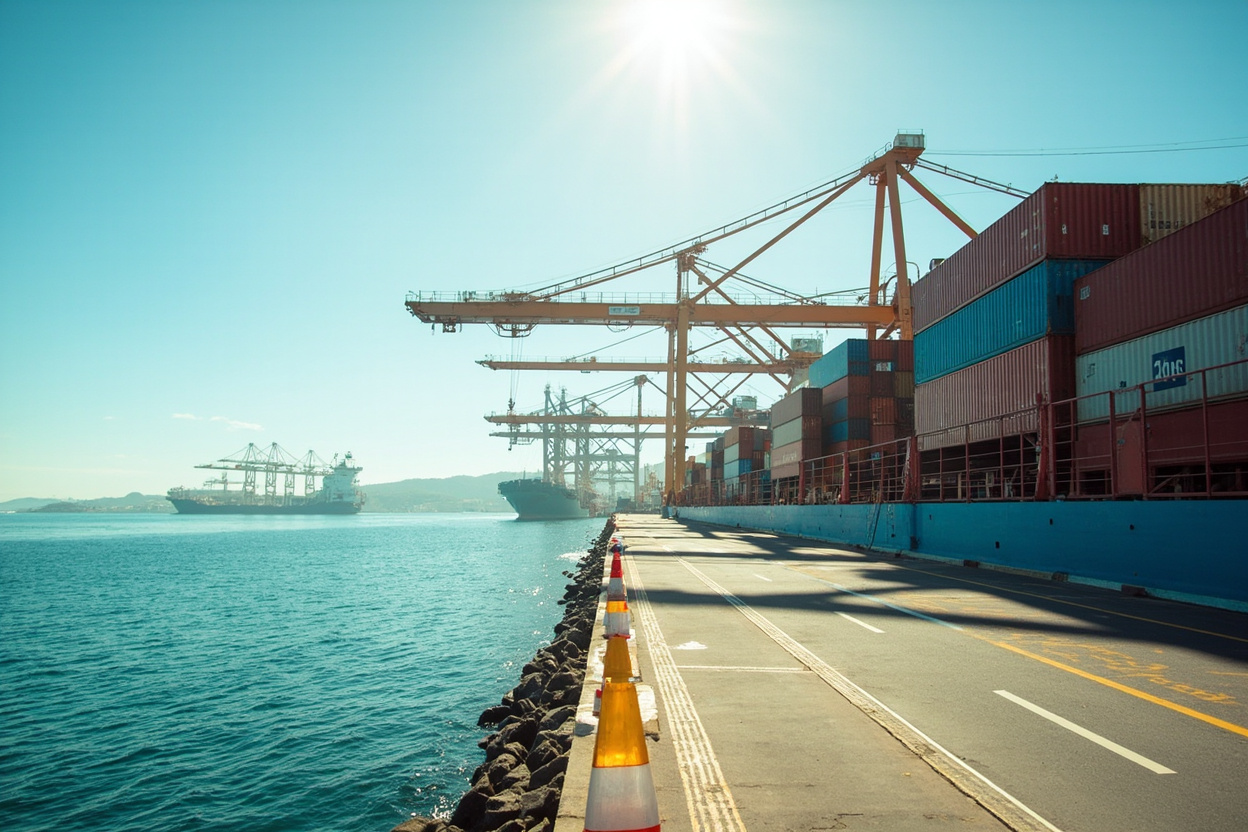
Chile's main container port. A high-volume operations hub and the benchmark for most Asia–Pacific routes.

What you can do in Valparaíso
Customs clearance with our own agent at the port
Receipt and dispatch of bulk or groupage cargo
Cargo inspection and examination before delivery
Road connection to the Valparaíso, Metropolitan and O’Higgins regions
Comparativa
Valparaíso, San Antonio or Iquique
All three ports have the same transit time from China. What changes is what happens once the container lands on Chilean soil: where the cargo is going, how long it takes and which type of operation each terminal handles better.
| Port | Transit | Last mile | Best for |
|---|---|---|---|
| Valparaíso The most natural connection point with the centre of the country and the one that best handles groupage cargo | 28–34 days | Direct to Santiago, Viña del Mar and O’Higgins, without going through another port | Groupage cargo (LCL) and medium volume destined for the central zone |
| San Antonio The largest container capacity and the most operating berths in the country | 28–34 days | Direct to Santiago and O’Higgins, avoiding the pass through Valparaíso: saves 1 to 2 days | High volume, project cargo and machinery requiring special equipment |
| Iquique The only land connection point with Bolivia: avoids a second sea shipment | 30–36 days | To Iquique, Arica and northern Chile in 2 to 5 days; to La Paz in 1 to 2 days via Chungará | Destination Bolivia (La Paz or Santa Cruz) and cargo for northern Chile |
Estimated reference times. The last mile and actual availability are confirmed in writing with the quote.
When to choose Valparaíso
No port is better than another: there is one that fits your cargo and your destination. These are the operations where Valparaíso is the most efficient option.
When the cargo is groupage (LCL) or medium volume and the destination is Santiago, Viña del Mar or the O’Higgins Region.
When you need the highest sailing frequency on the route and want to align your purchasing cycle with the shipping cycle.
When the cargo requires a direct connection to the centre of the country without going through a second port.
When the operation is a standard-size full container load and there is no urgency for mass discharge.
Estimated transit time
From China
28–34 days
From the loading port in China until the cargo is available in Valparaíso.
Customs clearance
3–7 days
From when the cargo is available to pick-up, with complete documents and no inspection.
Final delivery
1–3 days
From leaving the warehouse to your address inside the metropolitan region.
It is the port with the highest operational congestion in high season (November to March). Discharging capacity should be booked well in advance.
Operating notes in Valparaíso
The day-to-day detail that changes the times and costs of the operation. These are the variables worth confirming before committing to a sailing.
- In high season the wait for a berth can add between 2 and 4 days: space on the carrier and coordination with the terminal are arranged two weeks in advance.
- Valparaíso handles groupage cargo well, but deconsolidating a shared container with many shipments can take longer than discharging a full container load.
- For reefer cargo, the plug and temperature control are guaranteed only at the enabled berths: you must declare it when booking.
- The road connection towards Santiago and the central regions is direct, without going through San Antonio.
Costs in Valparaíso
Port costs are split into line items: discharge and handling (THC), storage, customs clearance and final delivery. We quote each one separately so you can compare.
| Ítem | How it is charged |
|---|---|
| THC and handling | Per container, depending on the equipment type and terminal congestion |
| Storage | Per calendar day, after a free period that depends on the contract |
| Customs clearance | Customs broker fees, depending on the number of line items and whether there is an examination |
| Physical examination | Clearance surcharge plus 2 to 5 additional days of storage |
| Final delivery | Per container or per pallet, with a distance surcharge within Chile |
| Duty and import VAT | On the declared CIF value; with a valid certificate of origin the duty stays at 0% |
| Cargo insurance | 0.3% to 0.8% of the declared value, with a minimum premium per shipment |
| Reference values | Clearance between CLP 300,000 and CLP 700,000 per D.I. (reference) |
Reference figures. The formal quote is issued in writing with the cargo breakdown.
Frequently asked questions about Valparaíso
What does a customs broker do in Valparaíso?
Files the import declaration (D.I.) with Chilean Customs, checks that the commercial invoice, the packing list and the bill of lading match each other, and coordinates the container pickup once it is released. If Customs opens a physical examination, the agent accompanies the inspection and records the outcome.
How long does customs clearance take in Valparaíso?
Between 3 and 7 days from the moment the cargo becomes available, with complete documents and no inspection. A physical examination adds between 2 and 5 days. In high season, November to March, terminal congestion can extend that timeline.
What happens if the cargo does not pass the physical examination?
Chilean Customs can reject the shipment if it finds a discrepancy between what was declared and what was observed: a different number of packages, goods that do not match the HS code, or a misclassified duty. In that case a correction declaration must be filed, with the cargo held in storage while it is regularised. The cost of that time is the storage, and the importer bears it.
Which documents do I have to check before shipping?
The commercial invoice, the packing list and the bill of lading (B/L). All three must match on the description of the goods, the weight and the number of packages. In addition, the HS code on the certificate of origin under the Chile–China Free Trade Agreement (TLC) must match the one on the commercial invoice, or the 0% duty does not apply.
When is Valparaíso a better fit than San Antonio?
When the final destination is Santiago, Viña del Mar or the O’Higgins Region and the cargo is groupage or medium volume. Valparaíso is the most natural connection point with the centre of the country. For project cargo or high volume, San Antonio is usually more efficient because of its greater berth capacity.
How much does it cost to clear a container in Valparaíso?
As a reference value, the customs broker fee runs between CLP 300,000 and CLP 700,000 per import declaration, plus the container THC and handling, storage and final delivery. If Customs opens a physical examination, the clearance is recalculated with the corresponding surcharge.
Quote your import to Valparaíso
Tell us the loading port, cargo type and estimated sailing date. We reply with the cost breakdown and the transit range.